通过绘画观察材料Observing Materials through Drawing
这组绘画收录于 2021 本科申请作品集,关注光线如何让材料的表面和体积变得可见。铅笔与炭笔描绘织物的结、褶皱和磨损,油画把折纸转化为层叠的色面;羽翼与服装主题进一步尝试多种媒介的并置。建筑写生则把相同的观察带到木构立面、窗部和庭院,在不同尺度中研究线条、明暗与细节。Collected in the 2021 undergraduate application portfolio, these works examine how light makes material surfaces and volumes visible. Pencil and charcoal describe knots, folds and worn fabric, while oil painting translates folded paper into layered fields of colour. Studies of a wing and clothing explore combinations of media. Architectural drawings extend the same attention to timber elevations, windows and a courtyard, studying line, tone and detail at different scales.
织物的褶皱与明暗Fabric, folds and tonal contrast
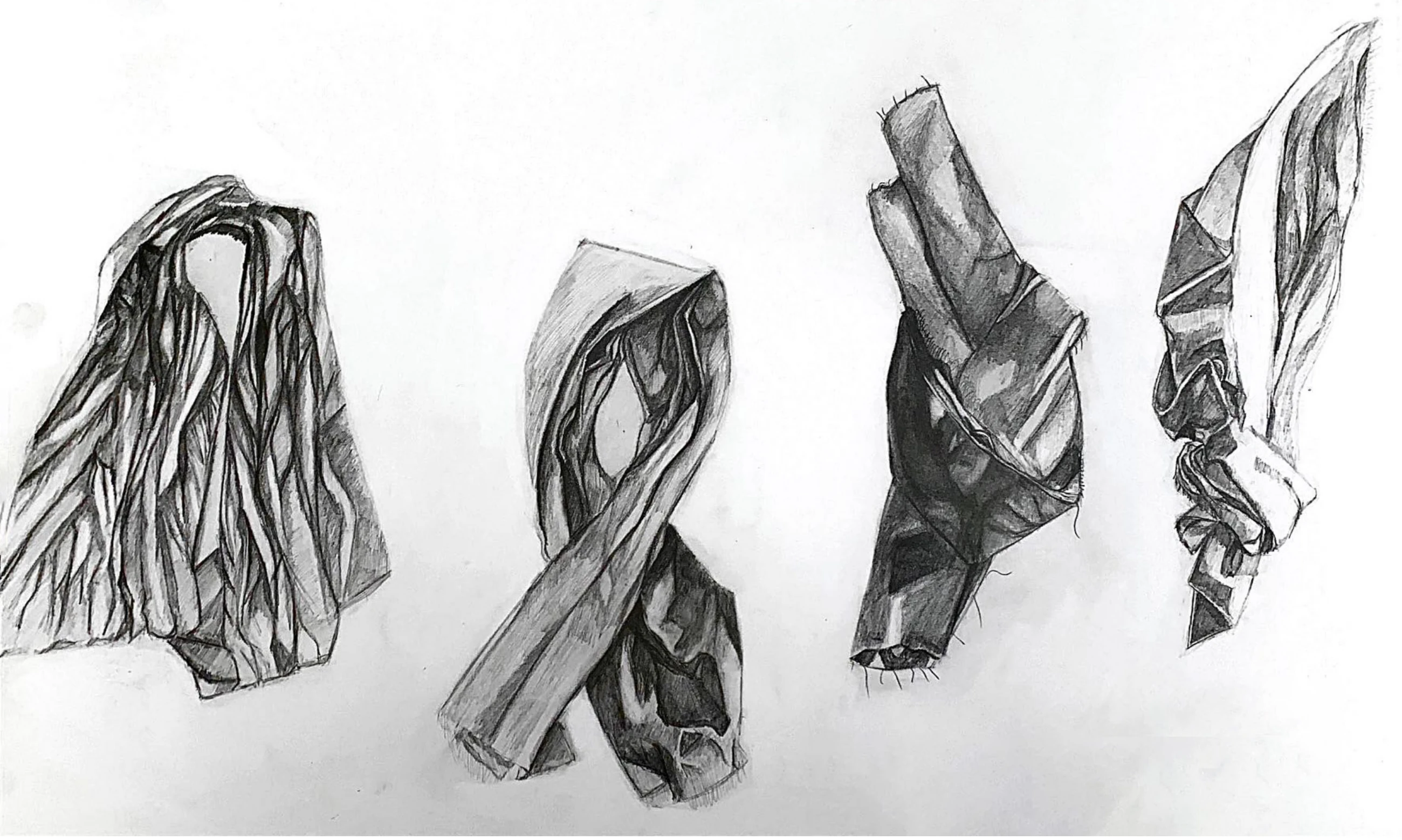
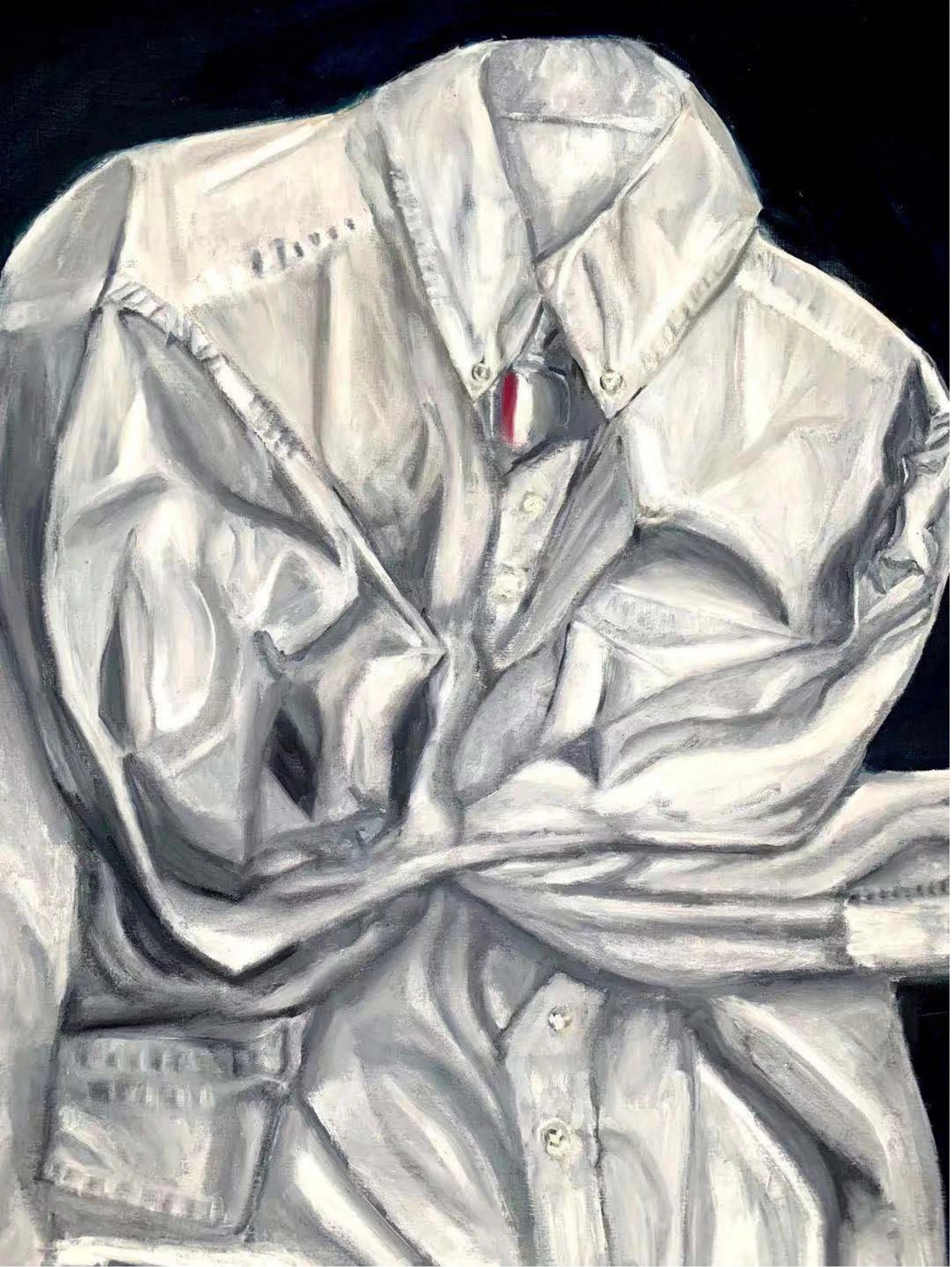
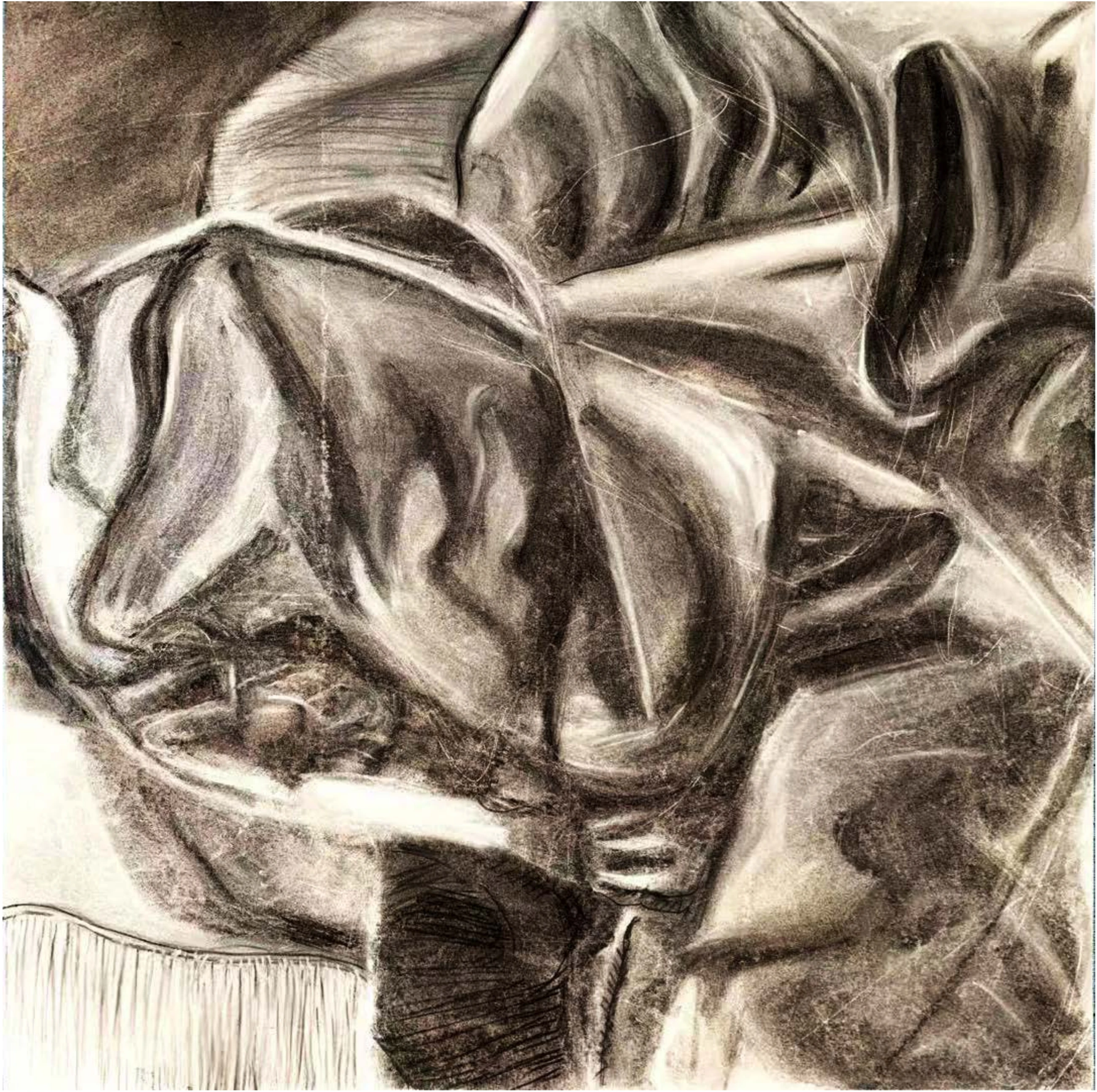
《Node》用铅笔比较结与悬垂织物中的亮面和暗部,《Cloth excerpt》则以炭笔和刮痕加强褶皱的深度与表面受损感。《White shirt》从实物写生出发,参考 Avigdor Arikha 的绘画风格,通过领口、纽扣与层叠布料组织体积。这些作品以不同处理方式观察同一种柔软材料。Node uses pencil to compare light and dark areas in knotted and hanging fabric. Cloth excerpt uses charcoal and scratches to deepen the folds and suggest surface damage. White shirt is drawn from an actual object while exploring Avigdor Arikha’s artistic style, arranging volume through its collar, buttons and overlapping cloth. Different treatments examine the character of a soft material.
色彩与综合媒介Colour and mixed media
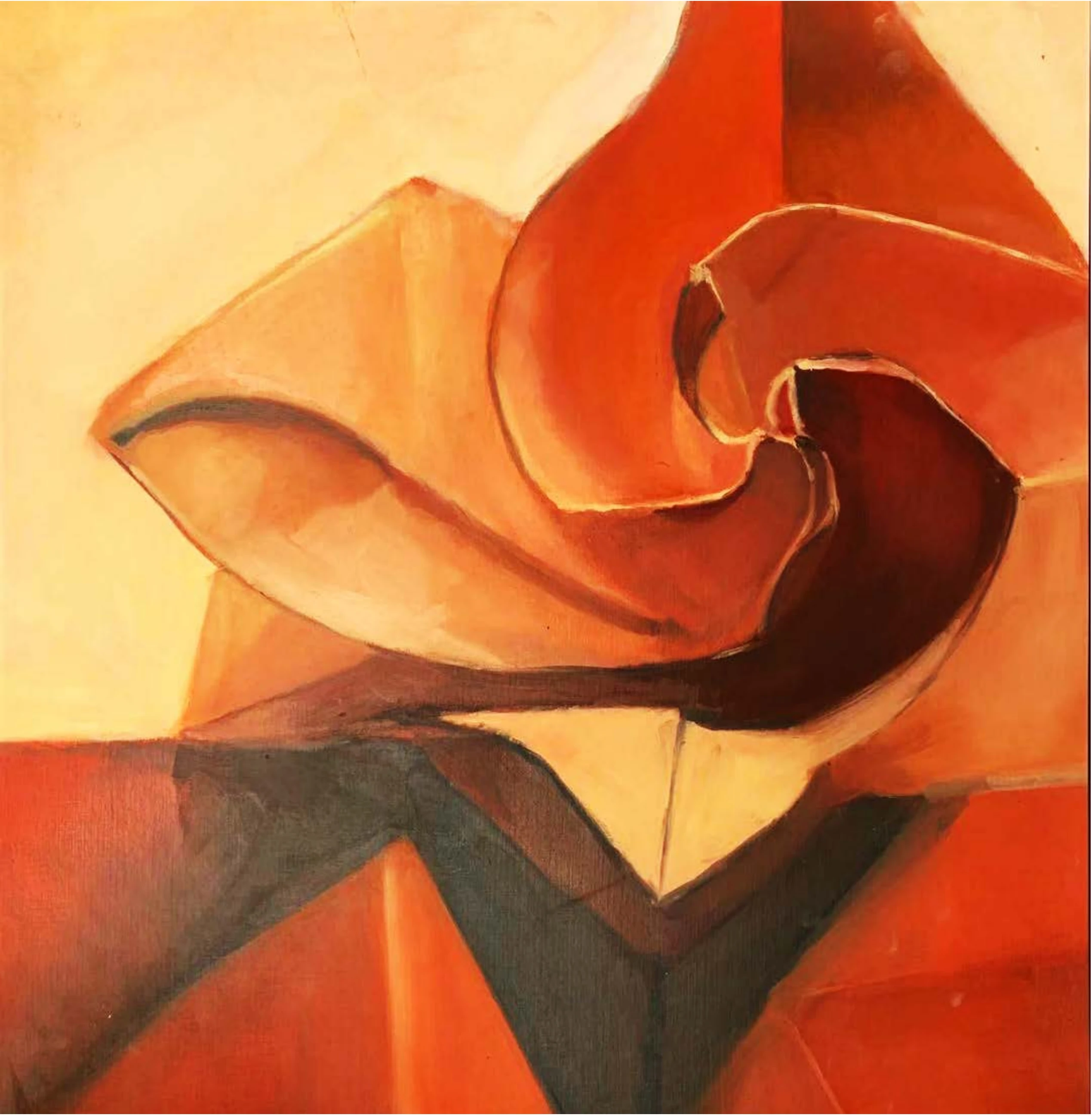
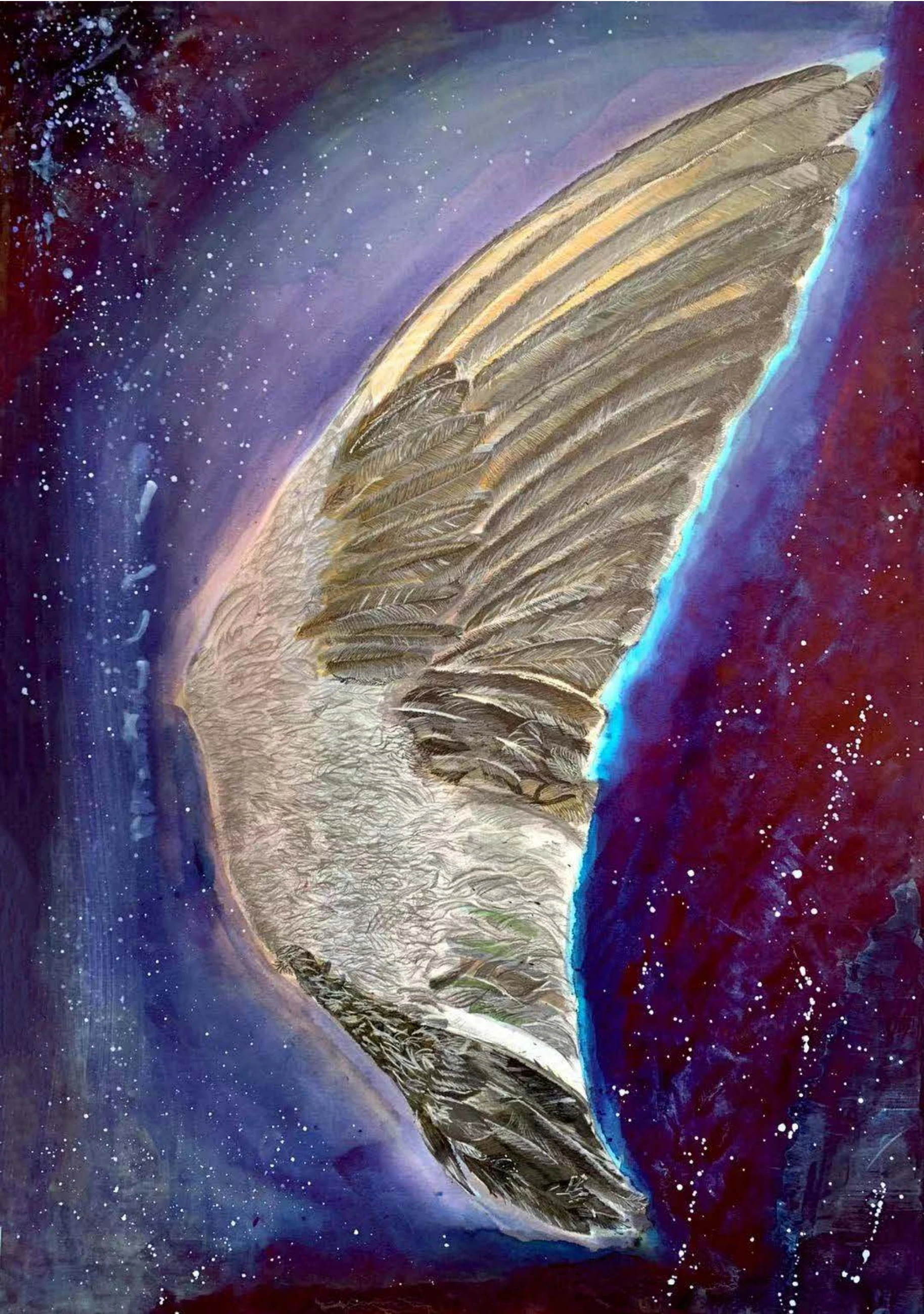
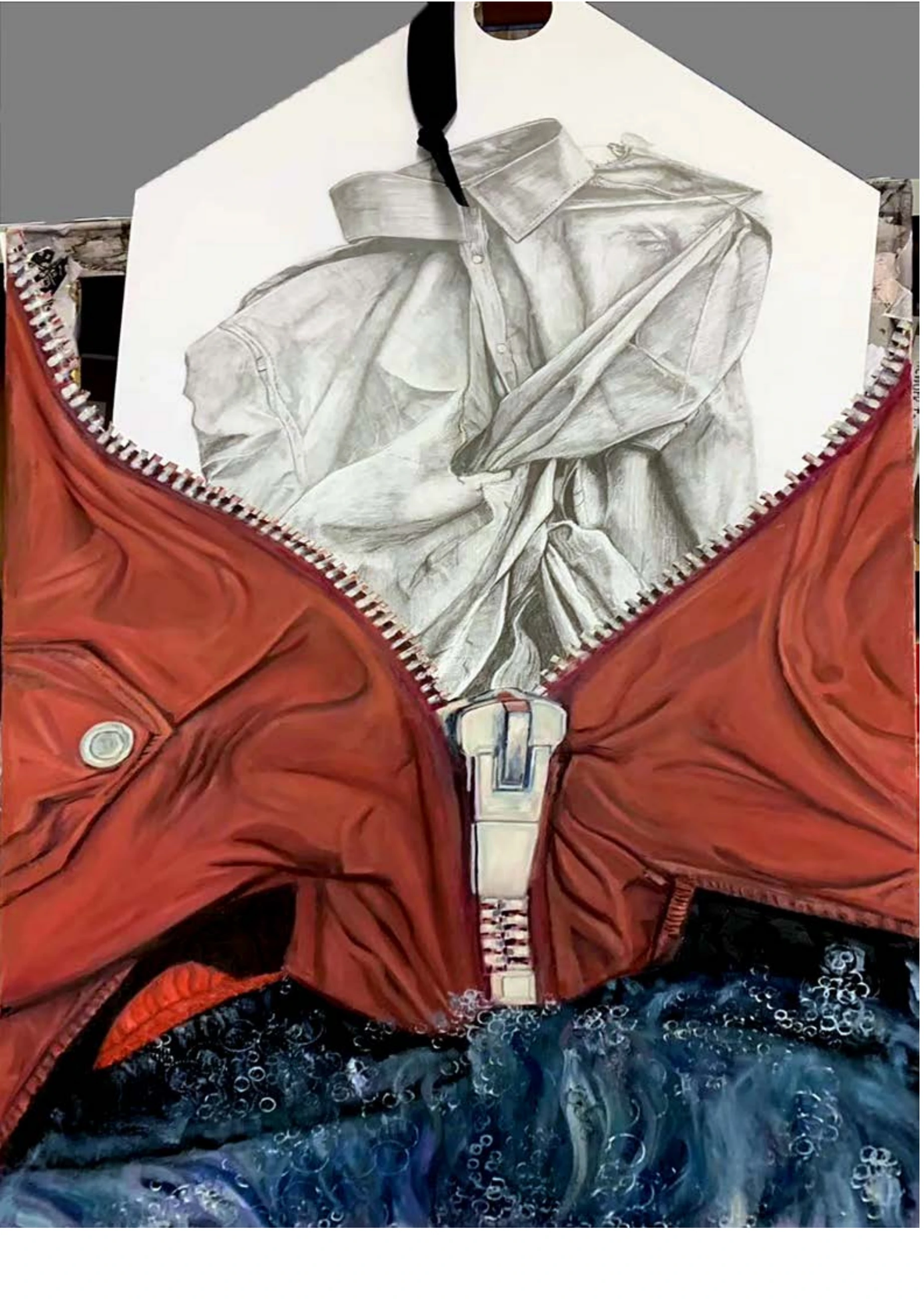
封面的《Paper flower》先以折纸形成观察对象,再用油画表现折面、阴影和暖色层次。《Wing-feather》把笔、马克笔、铅笔和墨水结合,以羽毛的细密结构对照星空背景。《Clothes and water pollution》将画布上的油画与纸板上的铅笔结合,把衣物、拉链和水的图像联系起来,延伸对织物的观察。The cover work, Paper flower, begins with a folded-paper object before using oil paint to describe its planes, shadows and warm colour relationships. Wing-feather combines pen, marker, pencil and ink, setting the intricate structure of feathers against a star-filled background. Clothes and water pollution brings together oil paint on canvas and pencil on cardboard, linking clothing, a zip and water imagery to extend the study of fabric.
从表面到建筑空间From surfaces to architectural space
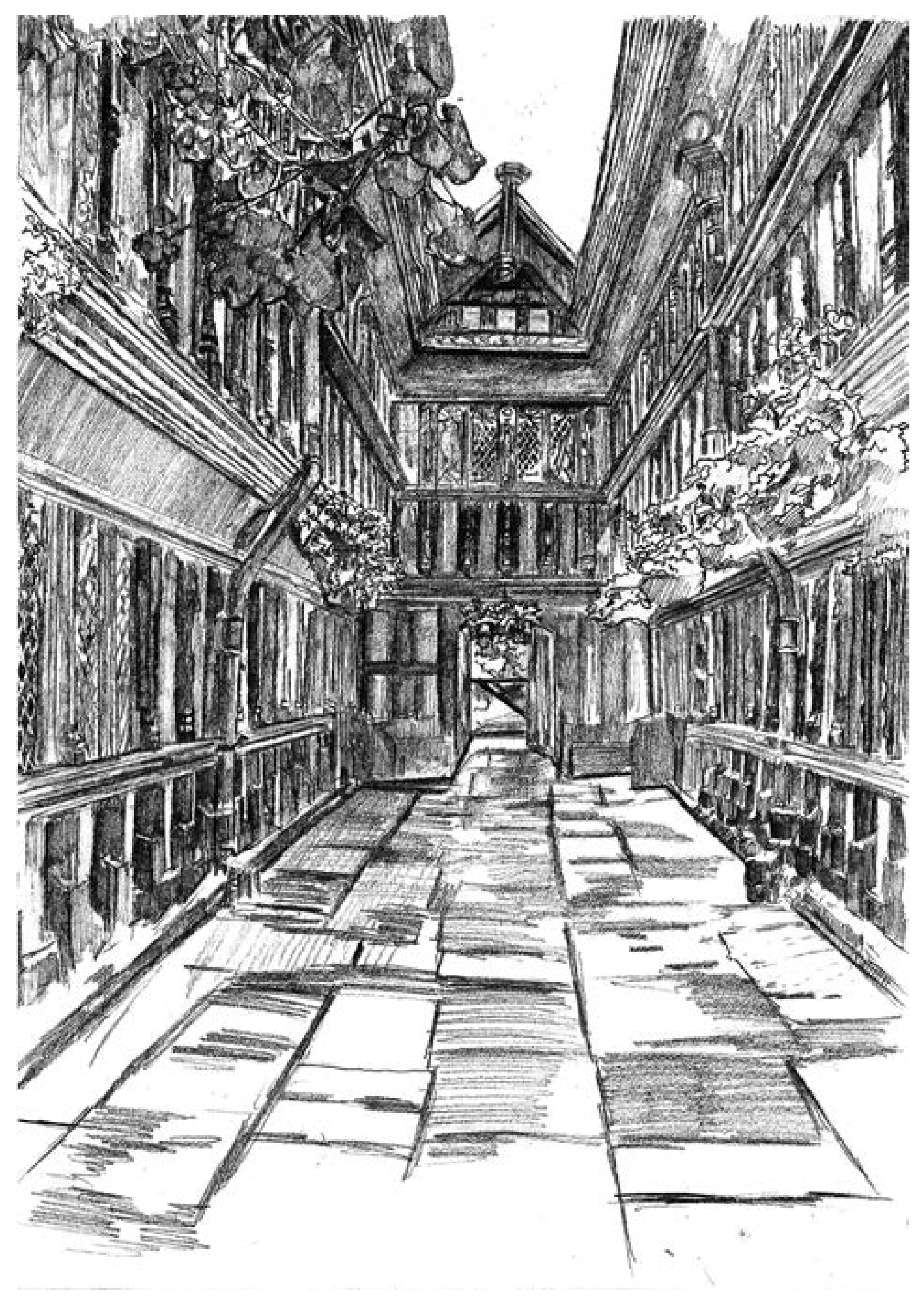
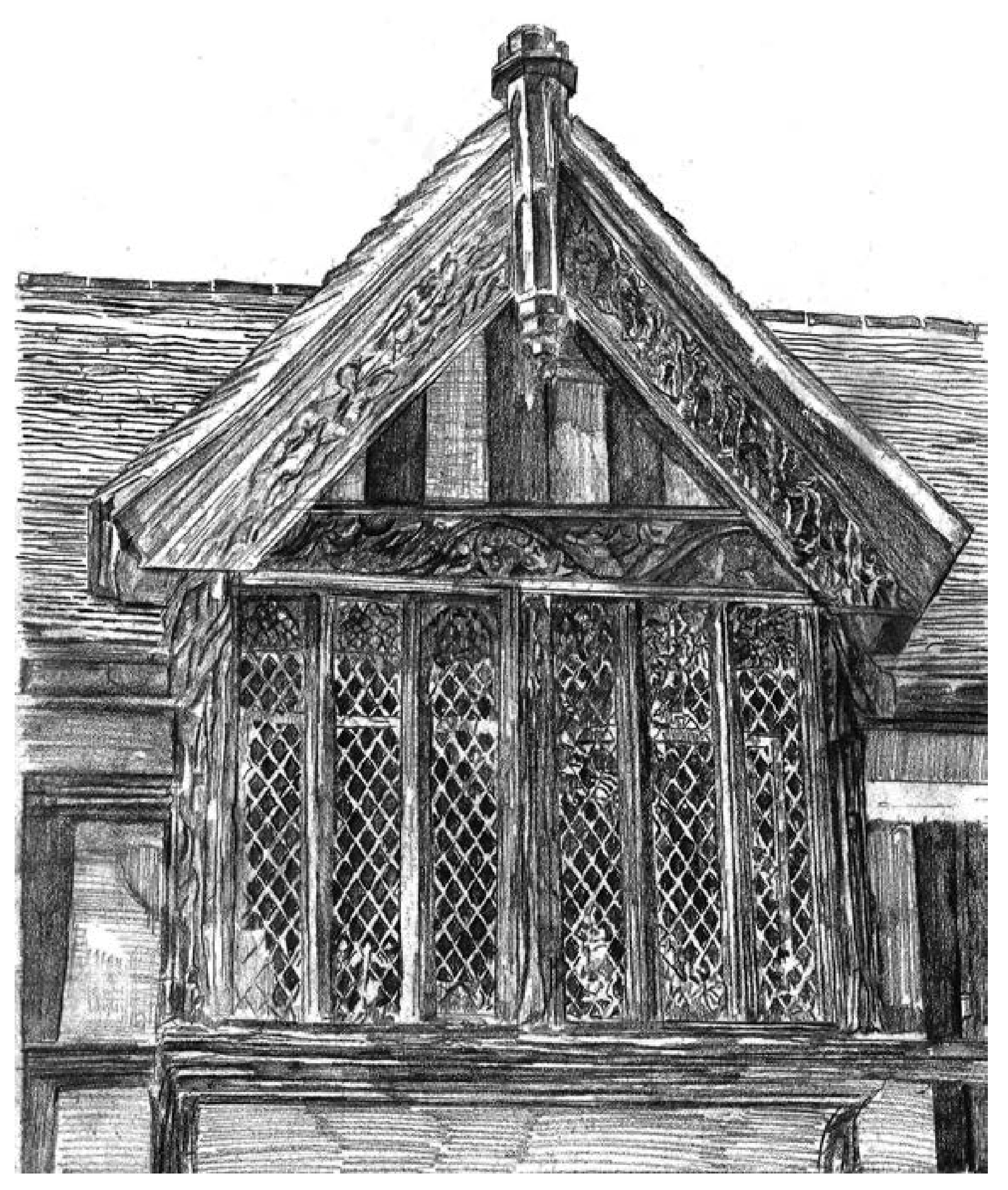
Ford Hospital 的建筑写生把视线从单件物体移向建筑。庭院图通过透视和地面阴影呈现空间纵深,窗部近景关注木构、窗格与装饰的层次。它们描绘的是英国考文垂一处既有建筑,展示观察与绘画能力。Drawings of Ford Hospital shift attention from individual objects to architecture. The courtyard view uses perspective and shadows on the ground to describe depth, while a close view of a window examines layers of timber framing, glazing and ornament. These studies depict an existing building in Coventry, demonstrating observation and drawing.
项目信息Credits
绘画作品:郑兴增。来源:本科申请作品集,Other Art Work 章节。《White shirt》为实物写生与 Avigdor Arikha 风格研究;Ford Hospital 图像为既有建筑写生。Drawings and paintings by Xingzeng Zheng. Source: the Other Art Work section of the undergraduate application portfolio. White shirt is an observational work exploring Avigdor Arikha’s style; the Ford Hospital drawings depict an existing building.
写生、材料表现与绘画构成Observational drawing, material studies and pictorial composition
联系我,了解这个项目Contact me about this project ↗